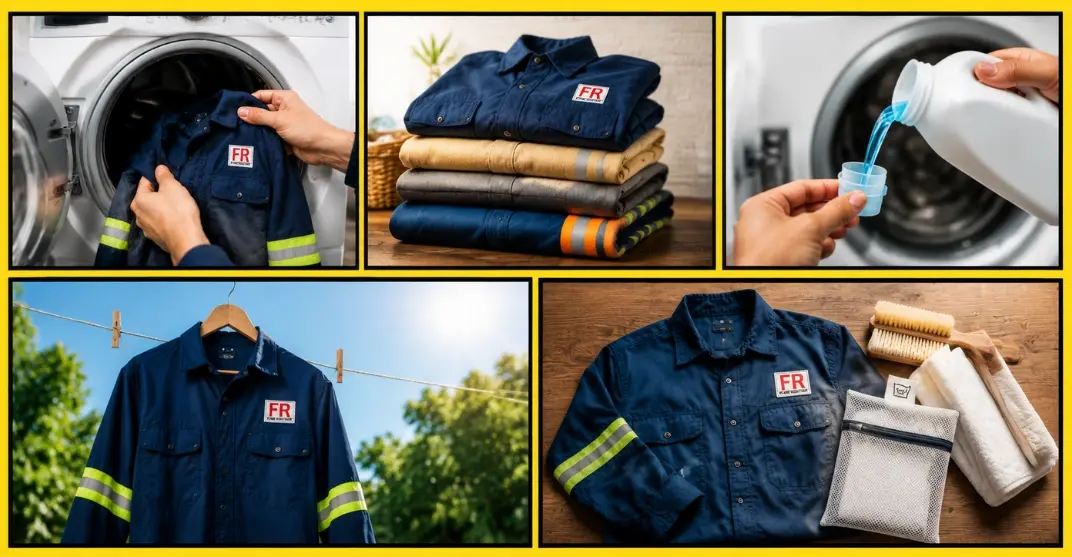
To wash FR clothing safely and maintain OSHA compliance, avoid these critical mistakes: using chlorine bleach or peroxides, adding fabric softeners or dryer sheets, washing with regular clothes, and using high-heat water, drying, or ironing. Instead, ensure safety by washing garments in separate loads with mild liquid detergent, keeping water temperatures below 140°F (60°C), tumble drying on low heat, and keeping irons away from reflective tape, logos, or synthetic components to prevent structural melting.
Buying protective gear is a massive investment for your company. Whether you manage a crew of linemen, field technicians, or welders, you already know the stakes. But buying the right gear is only half the battle. If your team does not know how to wash FR clothing correctly, improper laundering can reduce the garment’s protective performance and shorten its service life.
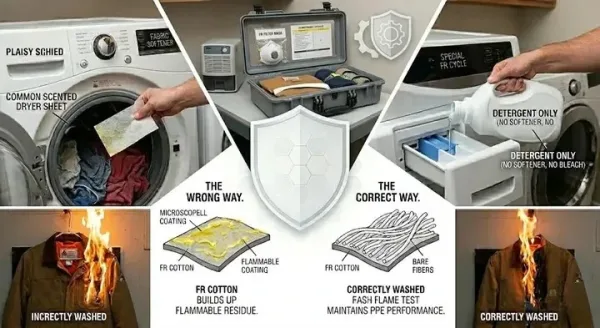
For procurement teams, safety directors, and facility managers, poor FR workwear maintenance can result in higher replacement costs, damaged uniform budgets, and potential compliance penalties. More importantly, it can compromise worker safety. If grease, improper cleaning chemicals, or flammable residues accumulate on a flame-resistant garment, its ability to self-extinguish may be reduced, increasing the risk of injury during a flash fire or arc flash incident.
To protect your team and keep your company in line with OSHA safety apparel compliance, avoid these 7 dangerous laundering mistakes.
Why FR Clothing Needs Special Care
Flame-resistant (FR) fabrics are specially engineered to resist catching fire and self-extinguish when exposed to flames. Some fabrics are treated with protective chemicals, while others are inherently flame-resistant on a molecular level.
If you are a safety manager in heavy sectors like oil and gas, electrical utilities, or welding fabrication, you know that fabrics face tough conditions. Over time, mud, sweat, and hazardous materials build up on flame resistant shirts, pants, gloves, jackets, material and coverall gear.
Washing FR clothing isn’t the same as washing regular corporate uniforms. Standard laundry routines can reduce the flame-retardant properties or leave fibers coated with flammable residue. To understand how FR fabrics differ from regular industrial apparel, check out our detailed guide on FR clothing vs regular workwear. Following proper flame resistant clothing care ensures the fabric continues to protect wearers during arc flashes or flash fires.
The 7 FR Garments Cleaning Mistakes to Avoid
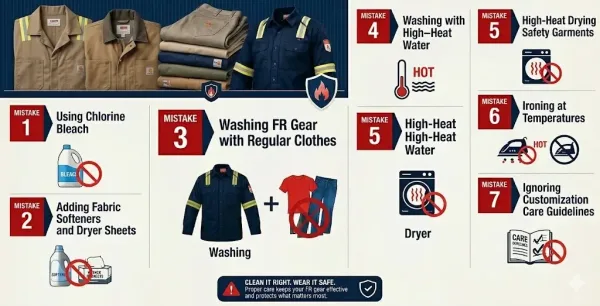
Mistake 1: Using Chlorine Bleach
Never use chlorine bleach on FR fabric. Bleach breaks down the chemical bonds in treated fabrics and weakens the fibers of inherent fabrics. This leads to rapid FR thread degradation, causing the garment to tear easily and lose its protective shield.
The Fix:
- Use mild, liquid home detergents for washing FR clothing to protect fabric chemistry.
- Check that your detergent lacks hidden bleaching agents that damage safety fibers.
- Avoid detergents with active peroxides to maintain flame resistance and prevent breakdown.
- Wash FR clothing using the water temperature suggested by the manufacturer to avoid warping.
- Avoid rough or fast washing cycles to protect the fabric from mechanical stress.
Mistake 2: Adding Fabric Softeners and Dryer Sheets
Using fabric softeners on flame resistant clothing is one of the quickest ways to create a safety hazard. Fabric softeners and dryer sheets leave behind a thin, waxy chemical residue on the fabric surface. This hidden coating is highly flammable and acts as fuel if a spark hits the garment.
The Fix:
- Skip the softeners entirely to avoid creating a flammable layer on safety gear.
- Eliminate dryer sheets, as their heat-activated compounds coat protective fibers in dangerous fuels.
- Track water hardness, since heavy mineral buildup can trap dangerous, flammable contaminants.
- Rely on repeated washing to naturally break in stiff, heavy-duty protective weaves safely.
- Remind workers that clean, unvarnished fabric is the only way to guarantee safety on the field.
Mistake 3: Washing FR Gear with Regular Clothes
Mixing your industrial flame resistant uniforms with everyday cotton or polyester clothing causes cross-contamination. Lint from standard flammable clothing can attach to your FR gear. Additionally, regular clothes may carry oils and grease that can transfer onto your protective garments during the wash cycle.
The Fix:
- Always wash FR coveralls – flame resistant gear in a separate, dedicated laundry load.
- Separate loads by fabric weight to keep heavy metal zippers from tearing lighter safety gear.
- Never mix regular polyester clothes with FR gear, as non-FR fibers can melt onto protective fabrics.
- Wash muddy or greasy uniforms separately to stop contaminants from settling into clean safety fibers.
- Group your safety gear by job hazards to prevent oil stains from ruining cleaner garments.
Mistake 4: Washing with High-Heat Water
Hot water can shrink FR garments and change their fit. A tighter garment reduces the protective air gap between the fabric and the skin, which is essential for preventing serious burns during an arc flash. Excessive heat can also damage the fabric’s structure, weaken fire-retardant treatments, and permanently reduce the strength of the material.
The Fix:
- Set commercial washers strictly below 140°F to guarantee safe washing for flame resistant clothing and preserve thread strength.
- Enforce strict warm-water protocols to lock in the garment’s original size and maintain the protective air gap.
- Ban boiling water cycles to prevent the premature breakdown of flame-retardant chemical bonds.
- Utilize digital temperature tracking on facility machines rather than relying on inaccurate manual dials.
- Calibrate water valves quarterly to eliminate unexpected heat spikes that cause mass fabric shrinkage.
Mistake 5: High-Heat Drying Safety Garments
Using high-heat drying safety garments damages the structural strength of specialized fabrics. Excessive thermal stress in commercial dryers triggers polymer relaxation, causing severe shrinkage and fiber brittleness. This extreme heat alters the garment’s dimensions and warps the heavy-duty components of protective apparel, like reflective strips on high visibility flame resistant clothing. Over time, high temperatures degrade the retroreflective glass beads within the safety tape, rendering the visibility elements useless during low-light industrial operations.
The Fix:
- Use low heat or the “delicate” dryer setting so the intense heat doesn’t weaken the protective fabric.
- Run a 10-minute cool-down cycle at the end to let the fibers cool down and settle safely.
- Hang dry clothes indoors to completely stop the wear and tear caused by tumbling inside the machine.
- Check the reflective safety strips after drying to make sure the glue hasn’t cracked or peeled off.
- Take the clothes out while they are still slightly damp to prevent over-drying, static cling, and brittle fabric.
Mistake 6: Ironing at Extreme Temperatures
If your corporate team needs to look crisp, be careful with high-heat pressing. Standard irons regularly exceed 400 degree F(204 degree C), a thermal threshold that causes immediate, irreversible damage to protective gear. Extreme iron temperatures deform and melt synthetic components, such as Nomex® sewing threads or specialized meta-aramid blends, compromising the garment’s structural integrity. Furthermore, direct heat transfers can liquefy internal adhesives and bond specialized coatings directly to the iron faceplate, rendering the protective barrier useless.
The Fix:
- Set irons strictly to the lowest temperature setting (such as the “Synthetic” or “Silk” mode) to prevent localized fabric scorching.
- Place a clean cotton cloth over the gear to act as a shield against direct heat.
- Keep the iron away from stitched seams so the safety threads don’t weaken or snap.
- Never touch reflective tape or plastic buttons with a hot iron, as they melt instantly.
- Use a clothes steamer instead of an iron to safely remove wrinkles without any burn risk.
Mistake 7: Ignoring Customization Care Guidelines
Using standard, harsh wash cycles on customized safety gear can ruin the protection your team needs. When company logos, custom prints, or extra reflective patches are added, the care rules change completely. The glue, ink, and materials used for these designs cannot handle the same high heat and strong chemicals as the main flame-resistant fabric. Washing them like regular uniforms can melt the logos, crack the safety lettering, and damage the protective fabric underneath.
The Fix:
- Check the guidelines for the specific logos or prints used to make sure your wash cycles aren’t too hot.
- Turn customized clothes inside out before washing to stop the designs from rubbing and scratching against the machine.
- Lower the dryer heat so the glue holding the heat-applied logos doesn’t melt or peel off.
- Avoid harsh stain-removers near the logos, as these chemicals can dissolve or ruin the printed ink.
- Check the edges of all logos after washing to make sure no loose threads or peeling parts are ruining the gear.
Home Laundry vs Industrial Laundry: Which Is Best?
When establishing FR uniforms cleaning tips for your organization, safety directors face a critical operational choice: trust employees to wash gear at home or hire an industrial laundering service. Standard domestic environments often fail to mitigate the specific risks associated with flash fire and arc flash hazards.
The comprehensive table below provides a highly technical, authoritative comparison to assist safety directors in executing regulatory compliance and risk management assessments:
For teams exposed to heavy grease, chemicals, or contaminants, industrial FR clothing laundry services are highly recommended. These specialized facilities use precise chemical formulas and strictly follow industrial laundering guidelines to safely extract embedded contaminants without degrading the fabric’s core flame resistance.
Conversely, if your staff handles light duties and washes gear at home, providing clear, written FR clothing care instructions is legally vital for organization-wide safety tracking, accountability, and corporate liability protection.
Keep Your Crew Compliant and Safe
Maintaining safety standards requires vigilance. By teaching your workforce these FR clothing safety tips and enforcing correct washing methods, you maximize the return on your safety budget and keep your workplace safe.
When it is time to refresh your company stock with fully compliant, NFPA 2112 certified FR clothing or garments that meet strict ASTM F1506 FR standards, choose a reliable partner. Whether you need to source durable, lightweight Carhartt FR shirts for daily field operations, equip your heavy-duty welding teams with Bulwark FR workwear denim and canvas jackets, or manage a complete managed program with specialized Tyndale FR uniforms and coveralls, selecting premium brands ensures your gear survives tough laundering protocols.
Avoid supply bottlenecks by placing your bulk FR clothing orders with an experienced supplier. Visit The Apparel Factory today to secure premium, long-lasting wholesale FR workwear that keeps your team fully protected on the job.
Final Thoughts: Making Safety a Sustainable Habit
Investing in high-quality flame-resistant garments is only the first step toward a compliant workplace; establishing a foolproof laundering culture is what keeps that protection alive. Whether your organization relies on structured home care policies or transitions to an industrial laundry program, eliminating these seven common mistakes protects your crew from catastrophic burn injuries and saves your uniform budget from premature replacement costs.
Safety standards only work when they are consistently maintained from the field to the laundry room. When you are ready to upgrade or expand your protective apparel stock, choosing a trusted apparel provider is essential.
Visit The Apparel Factory to secure top-tier, compliant wholesale FR clothing designed to survive tough shifts and rigorous washing cycles, ensuring your team stays completely safe on the job.
Frequently Asked Questions

Published on:
June 9, 2026