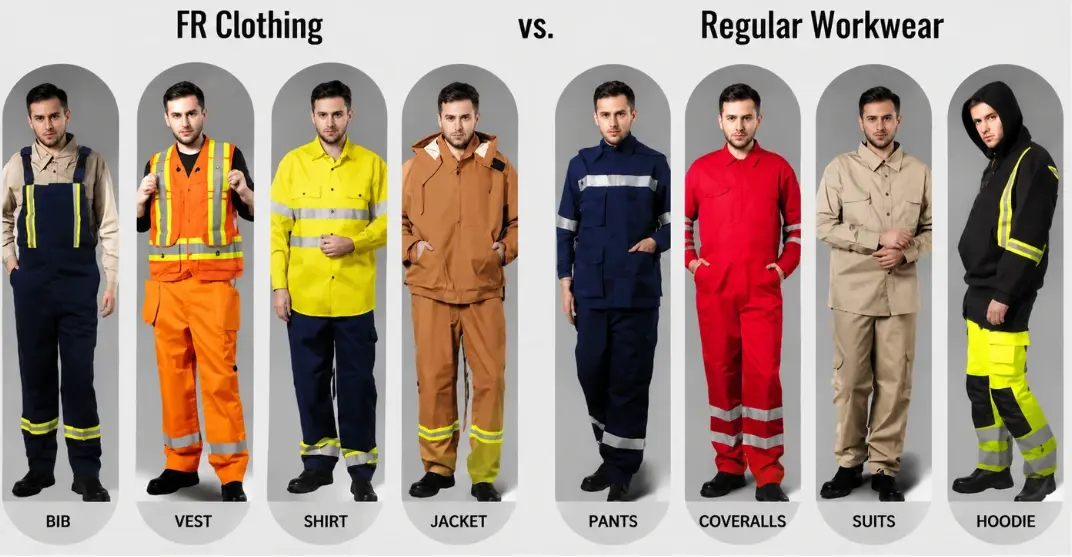
FR clothing protects workers from flame, flash fire, molten heat, and arc flash hazards. Regular workwear is made for comfort, durability, and daily use, but it does not provide certified flame protection. FR gear self-extinguishes, reduces burn injury, and must meet standards like NFPA 2112, NFPA 70E, and ASTM F1506. It also requires proper washing, no bleach or fabric softener, to maintain safety performance. Regular workwear should only be used in low-risk areas.
After years around welding bays, utility crews, refinery turnarounds, and industrial job sites, one thing becomes clear fast: heat hazards do not give workers a second chance. Arc flash, flash fire, molten metal splash, and short-duration flame exposure can turn normal clothing into fuel. That is why FR clothing vs regular workwear is not a style choice. It is a PPE decision. For safety managers and procurement teams, The Apparel Factory provides access to industrial workwear options, but the real decision starts with knowing when regular uniforms are not enough. FR clothing is built to self-extinguish, reduce burn injury, and support modern safety programs in hazardous industries like oil and gas.
What Is the Main Difference Between FR Clothing and Regular Workwear?
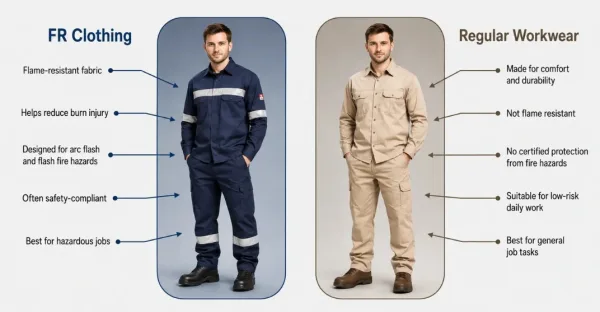
The main difference between FR clothing and regular workwear is protection. Regular workwear is made for durability, comfort, and appearance. However, certified flame resistant workwear is specifically engineered to reduce burn injury when exposed to flame, flash fire, or electric arc hazards.
Regular workwear may tear, fade, shrink, or wear out. FR clothing must do more. It must resist ignition, self-extinguish, and reduce heat transfer to the skin. This is why fire resistant apparel vs standard workwear matters in oil and gas, electrical utilities, welding, manufacturing, construction, and industrial maintenance.
Difference 1: Material Science — Inherent FR vs Treated Fabrics
Regular workwear is usually made from cotton, polyester, nylon, canvas, denim, or blends. These fabrics can be strong, but strength is not the same as flame protection.
The Melting Danger of Synthetic Polymers
The biggest danger is synthetic fabric. Polyester and nylon can melt when exposed to extreme heat. Melted fabric can stick to skin and make burns worse. This is one reason why regular workwear melts during arc flash or flash fire exposure.
Structural Defense: Inherent FR Fabrics
FR clothing uses special fabric technology, starting with high-performance options engineered directly at the molecular level:
- Built-In Protection: Inherent FR fabrics have flame resistance permanently built straight into the fiber itself.
- Structural Safety: The protection is a core part of the actual fabric structure rather than a temporary layer.
- No Chemical Dependency: These fabrics do not depend on a surface chemical finish to resist flames.
- Permanent Performance: Because the safety is structural, the flame resistance cannot wash out or wear away over time.
- Industry Examples: Common materials include Nomex, modacrylic blends, and advanced FR fiber systems.
Chemical Engineering: Treated FR Fabrics
Treated FR fabrics are usually cotton or cotton blends treated with flame-resistant chemistry. The treatment helps the fabric self-extinguish and resist burning when exposed to flame.
This is the key point in inherent FR vs treated fabrics: inherent FR protection is built into the fiber, while treated FR protection is added to the fabric. Both can be effective when certified correctly.
Everyday Workwear vs. Engineered PPE
A standard rugged canvas jacket, like a traditional Carhartt work jacket, may be tough for daily use, but it is not automatically FR. Specialized protective lines, such as the Bulwark FR iQ Series or Tyndale’s inherent protective layers, are built for flame and arc exposure. That is the real difference in flame resistant clothing vs regular clothes.
Difference 2: Compliance & Test Standards — The Legal Line
A garment is not legally FR just because it feels thick or looks heavy-duty. It must meet recognized safety standards.
Key Industrial Safety Ratings to Know
- NFPA 2112: Used for flame-resistant garments that protect industrial workers from short-duration flash fire exposure.
- NFPA 70E: Used for electrical safety in workplaces where arc flash hazards may exist.
- ASTM F1506: A performance standard for flame-resistant and arc-rated clothing used by workers exposed to electric arcs and flame.
What to Verify Before Buying?
For flash fire risks, buyers should check FR clothing safety standards NFPA 2112. For electrical work, they should check arc rating, NFPA 70E alignment, and ASTM F1506 compliance.
The Certification Gap in Standard Workwear
Regular workwear does not have these lab-tested certifications. It may be strong, but it is not tested to self-extinguish, resist arc energy, or protect against flash fire.
Difference 3: Real-World Ergonomics — The Fit Revolution
Old FR clothing had a bad reputation for stiff shirts, heavy pants, boxy jackets, and hot gear. That created a safety problem because uncomfortable PPE is often worn incorrectly or avoided.
The Modern Shift to Lightweight Performance
Modern FR clothing is lighter, better fitted, and easier to work in. Brands now focus on mobility, breathability, moisture control, and safer fit because PPE must fit correctly to protect correctly.
Engineered FR Options for Industrial Sourcing
The Apparel Factory carries FR options such as the Bulwark SEK2L Tagless Mock Turtleneck EXCEL FR Long Sizes, Bulwark FR Jackets and Pants, Carhartt flame-resistant work shirts, Berne FRSH21 Men’s Flame-Resistant Down Plaid Work Shirt, and Berne FRSH21T Men’s Tall Flame-Resistant Down Plaid Work Shirt. These products support safer movement, better coverage, and practical protection for industrial, electrical, construction, and hazardous work environments.
How Poor Fit Creates Workplace Risks
Poor fit creates major operational risks across hazardous job sites:
- Loose Clothing Hazards: Excess or baggy fabric can easily catch on heavy machinery, conveyor belts, or moving equipment components.
- Restricted Mobility: Tight fabrics limit a worker’s natural range of motion, making it harder to react quickly or climb safely.
- Sleeve and Glove Interferences: Oversized sleeves can ride up to expose bare skin or bunch up and interfere with safety gloves.
- Ergonomic Safety Gear: This includes active-movement layers like the Bulwark SEK2L Tagless Mock Turtleneck, designed to ensure both safety compliance and a secure fit.
The Evolution of Protective Design
This is why fire resistant apparel vs standard workwear has changed. Modern FR gear is no longer just heavy protection; it is protective clothing designed for real work movement.
Difference 4: Laundering, Care, & Lifespan
Regular workwear is easy to wash. If a normal cotton shirt fades or shrinks, it becomes less professional, but it usually does not create a direct safety failure.
Why Proper Maintenance Matters for FR Gear
FR clothing is different. Bad washing habits can reduce safety performance, especially with treated FR fabrics. Bleach, fabric softeners, starch, and some detergents can leave residues or damage the protective finish.
Critical Washing Rules for Safety Compliance
FR clothing should be washed according to the care label. Common rules include:
- Wash FR garments separately from oily or greasy clothing.
- Avoid bleach.
- Avoid fabric softener.
- Avoid starch.
- Remove grease, oil, and flammable contaminants before reuse.
- Do not keep using damaged FR garments with holes, thin spots, broken closures, or heavy chemical contamination.
Understanding the Lifespan of Protective Fabrics
FR clothing lifespan depends on fabric type, washing method, work conditions, contamination, and garment damage. Inherent FR garments usually keep their protective properties for the life of the garment, as long as the fabric is not damaged or contaminated. Treated FR garments can also last well when cleaned correctly, but improper laundering can shorten performance.
The Strategic Choice for Corporate Procurement
This is where inherent FR vs treated fabrics becomes important for procurement. Inherent FR may cost more upfront, but it can offer strong long-term value for high-use programs.
Difference 5: Cost-per-Wear & True ROI
The cost of FR clothing vs regular workwear is higher at the start. A regular work shirt may cost far less than a certified FR shirt. But the purchase price is not the full cost.
The Hidden Liabilities for Safety Managers
For safety managers, the real cost includes:
- Worker injury risk increases when proper PPE is ignored.
- Lost workdays reduce productivity and delay project timelines.
- Medical costs rise after preventable workplace burn injuries.
- OSHA violations can lead to serious financial penalties.
- Legal exposure increases after safety compliance failures occur.
- Insurance impact grows when workplace claims increase repeatedly.
- Equipment downtime delays operations and affects business output.
- Replacement uniform costs increase with poor garment planning.
- Brand damage happens after serious workplace safety incidents.
What Happens When Protection Fails?
A regular shirt might look like a money-saver on paper. But if a worker faces a sudden arc flash or flash fire while wearing it, the regular shirt can catch fire or melt, leading to severe injuries. FR clothing isn’t a luxury or a fashion choice; it is built specifically to keep injuries as minor as possible when an accident happens.
Smart B2B Sourcing and Lifetime Value
For B2B buying, compare cost-per-wear. A certified FR garment that lasts through many shifts, serves as durable flame resistant workwear for construction, washes correctly, and protects workers may deliver better ROI than replacing cheap regular workwear often.
Risk Assessment Over Price Tags
This is why FR clothing vs regular workwear must be judged by risk, not just price.
FR Clothing vs Regular Workwear: Quick Comparison
Final Answer
The main difference between FR and non-FR clothing is safety performance. Regular workwear is made for daily wear, while FR clothing helps reduce burn injury from flame, flash fire, or arc flash exposure.
If workers face electrical energy, welding sparks, combustible dust, or industrial flame hazards, regular workwear is not enough. Certified protective apparel is the safer choice when hazard assessments require it.
For procurement teams, use regular workwear in low-risk areas and choose certified FR gear for hazardous jobs. The Apparel Factory helps businesses source bulk flame resistant clothing for businesses and branded custom flame resistant uniforms for workers, including full-body protection such as certified flame resistant shirts, pants, gloves, jackets, material and coverall to improve safety and compliance.
Protect your team with the right FR workwear today. Explore certified flame resistant clothing options from The Apparel Factory and build a safer uniform program for your workforce.
Frequently Asked Questions

Published on:
June 8, 2026