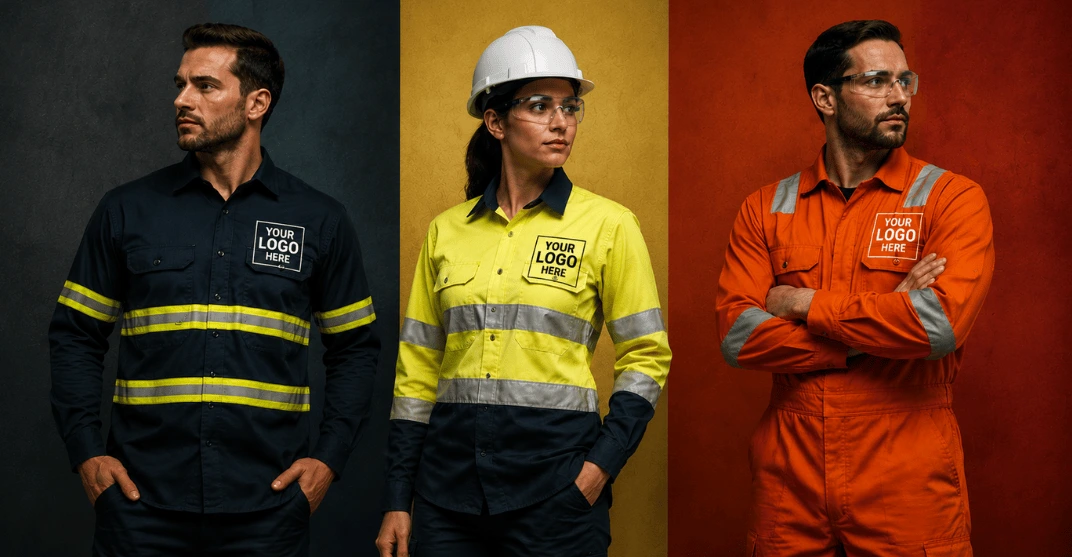
Use Nomex thread with certified FR backing for embroidery or FR heat transfers to add logos safely. Keep non-FR logos under 16 sq. in., with no more than five patches or 40 sq. in. Avoid covering reflective stripes. Always use a certified provider to prevent OSHA fines starting at $16,550.
Customizing corporate branding on team safety gear is essential for professional identity, but execution errors can spark a regulatory nightmare. For procurement officers and safety managers, adding logos to safety workwear and FR apparel isn’t as simple as using a local embroidery shop; standard polyester threads or uncertified heat transfers can instantly transform premium protective assets into a severe workplace hazard. Ensuring absolute OSHA compliance requires strict engineering controls, as a single unrated alteration completely nullifies the thermal protection of your flame resistant clothing.
Under strict federal rules, modifications that compromise a garment’s integrity trigger non-compliance citations, massive liabilities, and catastrophic injuries. This breakdown details the technical protocols for compliant logo embroidery on FR clothing and specialized printing methodologies. By mastering these standards, you can safely scale your wholesale FR apparel uniform program to protect your workforce from field hazards while completely shielding your enterprise from devastating OSHA fines.
OSHA & NFPA Rules for Branding FR Gear
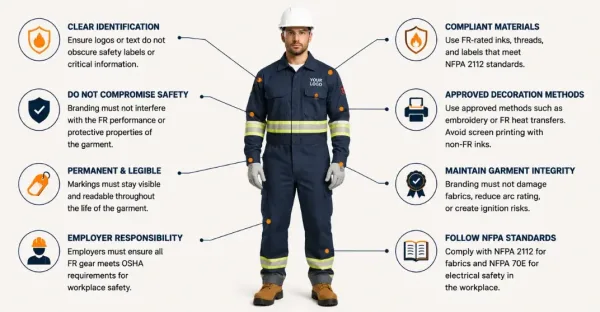
Navigating the intersection of safety standards and corporate identity can be tricky. Understanding the core legal frameworks helps protect your workforce and prevent costly penalties.
OSHA 1910.269 and the Risk of Branding
- Maintaining absolute OSHA compliance in a branded uniform program requires precise technical attention; treating protective workwear like standard promotional apparel can trigger unexpected OSHA fines.
- Under OSHA 1910.269, employers must ensure worker clothing does not increase injury risk during an electric arc or flash fire.
- In hazardous environments, safety clothing is the primary defense, and adding unapproved corporate branding alters this protective workwear.
- To avoid OSHA penalties on logo uniforms, companies must balance visual brand alignment with strict adherence to OSHA standards.
Industry Standards: NFPA 2112 and ASTM F1506
- Every single element added to a flame resistant garment must preserve its arc flash PPE compliance parameters to maintain workplace safety.
- Under NFPA 2112 certified logo customization rules, any component attached to the garment including emblems and structural embroidery—must be strictly non-flammable.
- Following the ASTM F1506 logo standards ensures that tracking, material composition, and attachment processes of your custom corporate safety gear remain fully compliant.
- Adhering to these protocols guarantees that branding modifications do not undermine the fabric’s original safety apparel regulations.
Embroidery vs. Printing on FR Apparel – The Technical Blueprint
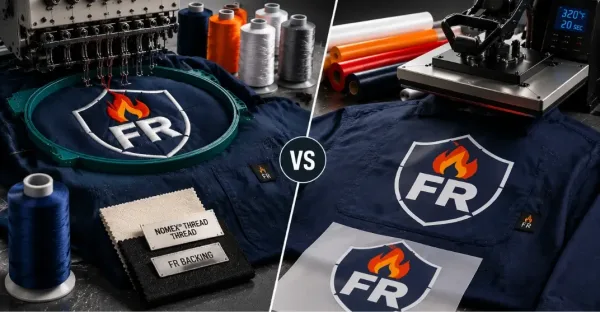
When deciding how to add company logos to FR clothing, procurement teams generally choose between two primary methods: structural stitching via an embroidery service, or heat seals utilizing a heat transfer service. While some operations look into a specialized screen printing service, all of these methods require completely different engineering controls to remain safe.
Technical Embroidery Protocols
Regular embroidery uses polyester or rayon threads, both of which have zero thermal resistance and melt rapidly at high temperatures. To execute adding embroidery to FR garments safely, you must use specialized non-flammable embroidery thread most commonly Nomex thread embroidery.
When customizing premium Bulwark FR shirts or heavy-duty Carhartt FR shirts, your vendor must also swap out the internal backing material. Standard tear-away backings are highly flammable; only certified flame-resistant backing materials can be fed into the embroidery machines to preserve total fire resistance.
Printing & Heat Transfer Protocols
If stitching isn’t ideal for your design, logo printing on flame resistant shirts is a reliable alternative provided you don’t use standard plastisol silk-screening. Conventional screen printing inks contain PVCs and flammable compounds that act as fuel during a thermal event.
Instead, compliant operations utilize specialized FR heat transfers. These graphics are chemically engineered to split or char without sustaining an active flame. However, graphic dimensions are tightly monitored to protect fabric breathability. Exact regulatory sizing parameters are broken down in our guidelines section below.
Common Customization Mistakes That Trigger OSHA Fines
Even with correct materials, basic errors in application can compromise your safety workwear. Understanding common FR clothing customization mistakes to avoid protecting your workforce from injury and your enterprise from costly litigation.
Oversized Logo Placements:
Covering large sections of a FR shirt with graphic emblems alters the garment’s overall thermal transfer capabilities. Keep patches small and localized (such as a standard left-chest or sleeve print).
Compromising Visibility Rails:
When modifying high visibility flame resistant clothing, logos must never stitch through or cover the reflective silver striping. Altering these safety grids violates ANSI/ISEA 107 visibility parameters alongside your standard fire resistance standards.
Ignoring the Structural Base:
Before customizing, it’s vital to know your fabric type. Understanding the manufacturing differences between inherent vs treated FR clothing reveals how different fibers react to post-production processing. For instance, modifying a treated cotton blend requires completely different tension dynamics than stitching into an inherently flame-resistant weave.
The Compliant FR Branding Roadmap
For operations managers directing large crews across the oil and gas industry safety gear tracking can be complex. Knowing where to buy flame resistant clothing that supports certified customization from day one is the most effective way to eliminate compliance gaps.
The Risks of Splitting Your Supply Chain
When purchasing wholesale FR shirts for field operations, do not split your supply chain. Buying raw garments from one supplier and sending them to an uncertified local printer breaks your chain of compliance tracking. Instead, rely on unified providers who specialize in flame resistant wholesale execution.
Managing a safety program means keeping all gear consistent and certified. Procurement teams must ensure that every flame resistant shirt, pants, gloves, jacket, material, and coverall meets the same compliance standards before being sent to the field.
A single source contract for your flame resistant uniforms ensures that your flame resistant workwear arrives at your facility with certified tracking documentation. Whether your team needs summer-ready shirts or winter-ready flame resistant jackets, centralized industrial uniform branding guarantees that every piece is inspected, certified, and safe from regulatory pushback.
OSHA Rules & Fines: Non-Compliant Branding Liabilities
While OSHA does not issue citations explicitly labeled “invalid logo design,” the agency penalizes uncertified alterations under its core equipment standards. Under 29 CFR 1910.269(l)(6)(iii) and 29 CFR 1910.132(a), the financial and legal liability for modifying protective clothing rests entirely on the employer.
The baseline for custom safety programs was established by the OSHA Letter of Interpretation (October 4, 2006). OSHA explicitly stated that while it does not pre-approve specific embroidery services, employers violate federal law if custom branding materials melt and increase the severity of a worker’s burn injury.
Logo Size Guidelines for FR Workwear
- Allowance, Not a Thread Rule: NFPA 2112, NFPA 70E, and ASTM F1506 allow small logos to use standard non-FR materials, as long as each logo stays within the specified size limit.
- 16-Square-Inch Limit: Individual non-FR logos or patches must not exceed 16 square inches (e.g., 4″ × 4″), roughly double the size of a standard credit card.
- No Shortcuts for Larger Logos: Logos exceeding 16 square inches require the entire graphic including substrate and backing to be fully flame-resistant; simply using Nomex thread is not sufficient.
- Total Garment Cap: A garment may have up to five non-FR patches, with a combined maximum area of 40 square inches.
In industrial site audits across the United States, unmanaged workplace safety apparel programs face direct penalties:
Six-Figure PPE Citations:
General PPE oversight and failure to maintain safe equipment design (29 CFR 1910.132(c)) lead to severe administrative fines. During field inspections in heavy industries, single-instance penalties for unrated or compromised protective gear consistently hit high-tier statutory limits, with severe violations carrying baseline fines starting at $16,550 per instance and escalating past $165,514 for repeated or willful neglect.
High-Visibility Citations:
Field inspectors regularly issue immediate penalties to teams whose custom logos disrupt fluorescent trim arrays, classifying the altered garments as failed visibility assets during onsite audits. Failing to maintain original safety geometries results in automatic workplace citations for lack of appropriate protective gear.
Third-Party Liability and Insurance Denial:
During flash fire and arc flash investigations in the Texas and Louisiana oil fields, insurance underwriters routinely test the charred remnants of uniforms. If laboratory forensics prove a worker’s injury was aggravated because a large, non-FR corporate back-print melted directly into their skin, insurance providers frequently deny liability coverage, exposing the business to multi-million-dollar civil lawsuits.
Conclusion:
Branded uniforms help build workplace cohesion, but worker safety must remain the absolute priority. Upgrading your crew’s construction safety clothing with corporate logos requires technical expertise, specialized components like non-flammable thread, and certified production workflows. Partnering with a dedicated B2B fulfillment provider like The Apparel Factory ensures you receive compliant, high-quality safety gear without risking costly penalties.
Remember, proper care is also critical to keeping your custom garments compliant over time. Harsh industrial washing can destroy custom logos and fabric treatments alike; read How to Clean FR Clothing to maximize your uniform investment safely.
Protect your workforce and secure your compliance. Contact our expert safety apparel team today to build a certified, fully compliant branded uniform program for your fleet.
Frequently Asked Questions

Published on:
June 10, 2026