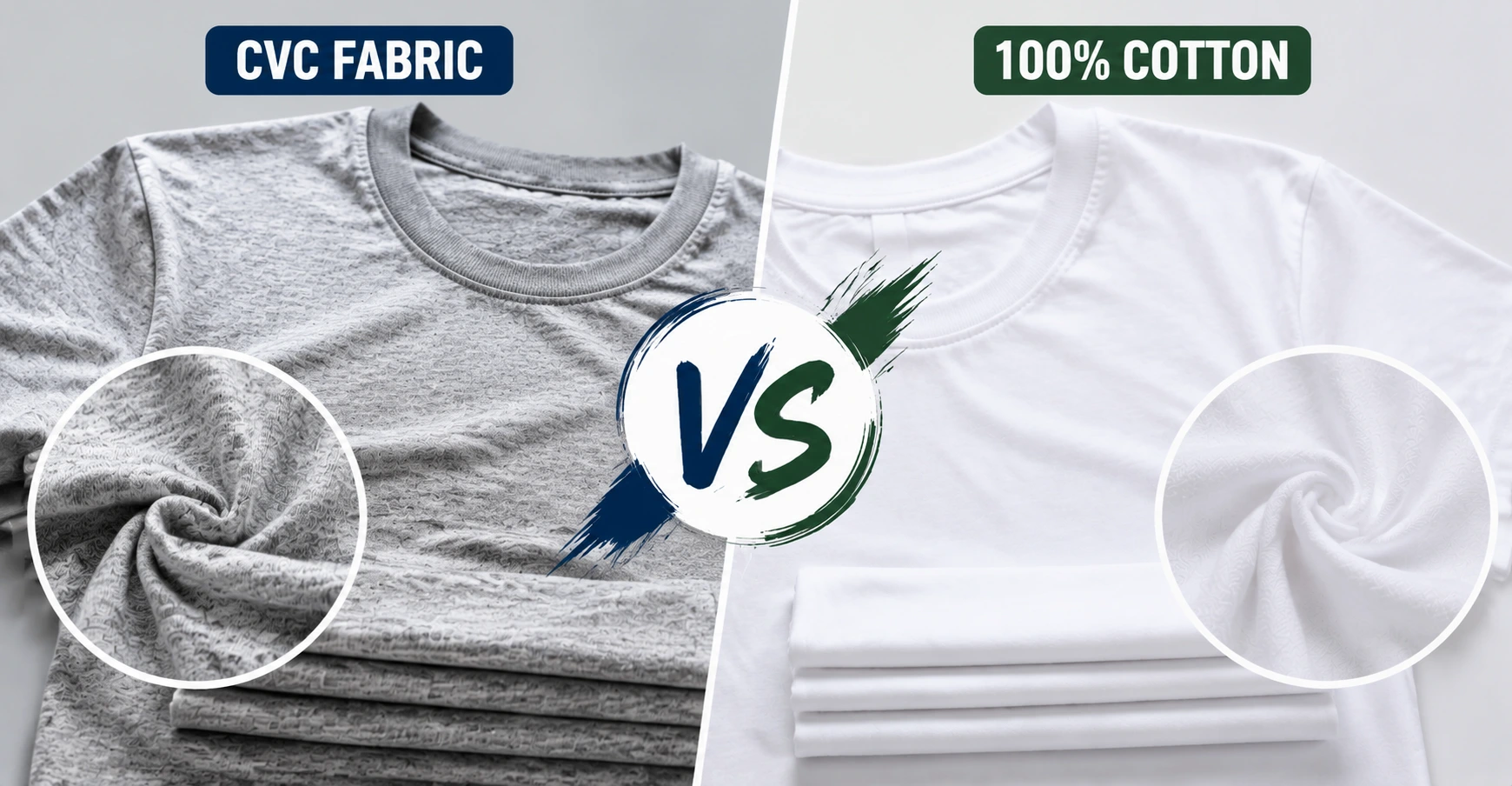
CVC (Chief Value Cotton) fabric is a blend made mostly of cotton (about 60%) and polyester (about 40%). It is used in bulk clothing like t-shirts because it feels soft like cotton but stays stronger and lasts longer.
Better shape: CVC does not shrink or lose shape easily like cotton.
Longer life: It stays strong and keeps color after many washes.
Better for printing: It works well for screen printing, heat transfer, and embroidery because the fabric stays stable.
Sourcing wholesale blank t-shirts for a clothing startup, a corporate team, or a merch store used to be simple. But anyone who has managed a commercial print shop or clothing brand knows the challenge of pure cotton during repeated washing and large scale production consistency.
This shift led the apparel industry to adopt blended fabrics that reduce production issues while improving consistency across bulk apparel orders. It is called CVC fabric, and it has quietly become the modern workhorse of the custom apparel industry. This is why 7 out of 10 wholesale buyers now prefer CVC over cotton.
If you are looking at wholesale catalogs trying to decide where to spend your production budget, understanding why bulk buyers choose this blend over pure cotton will completely change how you stock your inventory.
What Is CVC Fabric?
The acronym CVC stands for Chief Value Cotton. Its structure is designed specifically for bulk garment production where consistency and fabric stability are important. To be officially called CVC fabric, it must follow two main rules:
- The Majority Rule: Cotton must be the main fiber by weight. It should be more than 50% of the total blend.
- The Industry Standard: Some blends can be close like 52/48, but the most common and best quality standard used in apparel is 60% cotton and 40% polyester.
Weight and Visual Texture
- Comfortable Mid Weight Fabric: High quality CVC blanks typically weigh between 145 to 150 GSM (grams per square meter), which translates to roughly 4.3 to 4.5 ounces per square yard.
- The Perfect Balance: This exact weight strikes an ideal middle ground, it is thick enough to feel premium and durable, yet light enough to remain breezy and comfortable.
- The Unique Heather Effect: Because natural cotton and synthetic polyester absorb fabric dyes differently during production, the mixed yarns create a distinct, multi toned visual texture.
- Premium Visual Depth: Instead of a flat, solid block of color, this blend gives t-shirts a beautifully flecked look that adds high end retail depth to the garment.
Technical Battle: Material Comparisons
When choosing inventory, you are deciding how a garment will behave over its entire lifespan. Below is how CVC fabric compares with other common materials.
CVC Fabric vs Cotton
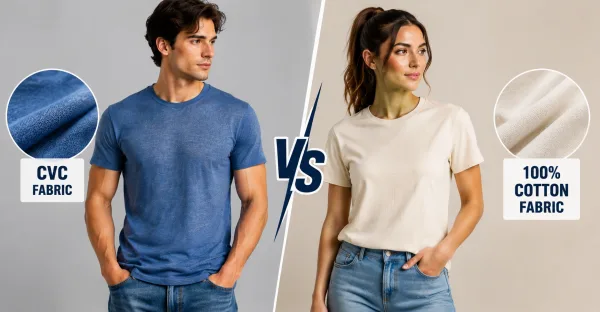
When comparing 100% cotton and CVC fabric, cotton is made fully from natural fibers, while CVC is a blend of about 60% cotton and 40% polyester. In large scale apparel production, cotton often shows variation in size and texture after repeated industrial washing cycles.
In contrast, CVC fabric also feels soft against the skin but holds its structure much better due to polyester support. The main advantage of cotton is high breathability, while CVC offers better durability and long term shape retention.
CVC vs Polyester and Performance Fabrics
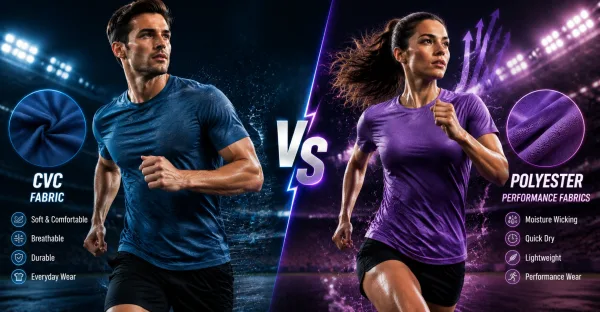
Polyester based garments are commonly used in athletic environments where moisture control and quick drying are prioritized over natural fabric feel. CVC fabric, however, is built for everyday lifestyle wear where softness and structure must stay balanced across long hours of use.
Customization Guidance
When purchasing wholesale t-shirts, understanding fabric ink interactions ensures top tier results from custom customization services.
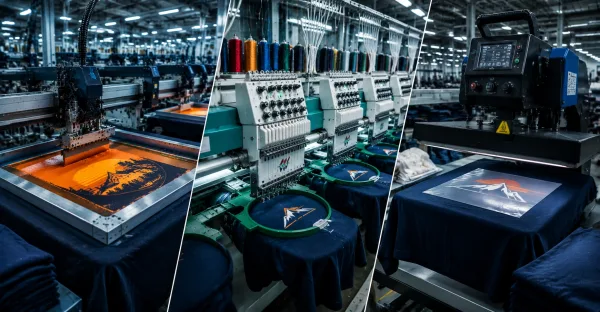
Screen Printing on CVC Blends
When running high speed bulk machinery for professional screen printing services, setting up automated equipment for the correct blend keeps massive production lines moving efficiently. Factory managers schedule CVC garments for large scale runs because:
- Exceptional Printing Surface: Standard plastisol screen printing inks sit cleanly on the tight 60/40 weave, allowing ink to sit on the fabric surface for sharper edge definition during mass production runs.
- The Dye Migration Risk: The main technicality to watch out for is dye migration, which happens when polyester is heated past 300°F in a curing dryer.
- How Ink Bleeds: Under high heat, fabric dye turns into a gas and bleeds into your ink, turning white ink slightly grey or pink.
- The Professional Fix: Professional screen printers easily prevent this by using low bleed inks and lowering their dryer temperatures.
Heat Transfer on CVC Blends
Large volume orders using automated heat transfer services need a stable fabric so designs stay consistent across all units. CVC fabrics are preferred because:
- Exceptional Adhesion Surface: The smooth 60/40 blend allows vinyl to stick firmly, supporting stable vinyl bonding when heat and pressure are evenly controlled across large production batches.
- The High Heat Risk: A common issue is scorching or heat press marks when too much heat is applied for too long.
- How Fabric Reacts: High heat and pressure can flatten synthetic fibers or create a shiny surface around the design.
- The Professional Fix: This is prevented by using low temperature vinyl and protective Teflon sheets during pressing.
Machine Embroidery on CVC Blends
Running multi head commercial embroidery services demands an incredibly consistent knit to eliminate costly machine downtime and needle breaks. Assembly plants prioritize manufacturing with CVC blanks for these reasons:
- Exceptional Structural Stability: The polyester content acts like a flexible base, helping the fabric hold up under dense stitching.
- The Post Wash Puckering Risk: A common issue is post wash distorting, which happens when the fabric is not properly stabilized.
- How Fabric Puckers: Without proper backing, cotton can shrink during washing while embroidery stays fixed, causing fabric bunching.
- The Professional Fix: This is avoided by using a cut away stabilizer backing and a light ballpoint needle.
CVC vs Fast Fashion Trend Angle
Fast fashion focuses on low cost, fast production, and short product lifecycles. It uses basic fabrics designed for quick trend turnover rather than long term durability.
In comparison, cvc cotton, cvc blend, and cvc material are designed for stability and repeated use. A cvc shirt or cvc t shirt maintains better shape, durability, and printing consistency across bulk production.
Unlike fast fashion garments that often fade or lose structure quickly, CVC offers more reliable quality for uniforms, merch, and wholesale apparel. It bridges the gap between affordability and long term performance in modern clothing production.
Pros & Cons of CVC Fabric
Evaluating these material characteristics helps manufacturing teams choose the perfect textile base. Weighing these functional advantages and decoration limitations ensures predictable bulk production results:
Pros of CVC Fabric
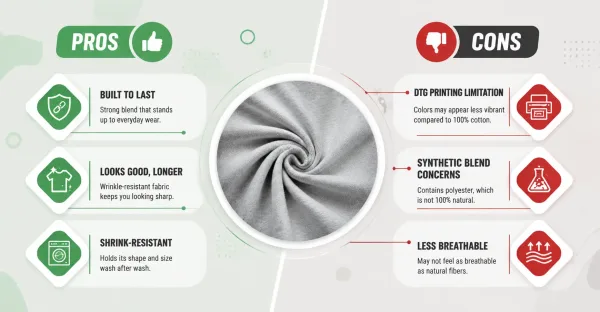
- Shrinkage and Warp Resistance: Extremely resistant to shrinking and warping during high temperature laundering and processing.
- Wrinkle Resistant Finish: Naturally resists wrinkles without ironing, keeping garments retail ready straight out of a shipping box.
- Superior Color Retention: Retains dark fabric dyes much longer than standard cotton, preventing fading over extended wear cycles.
- Industrial Grade Durability: Highly durable for commercial washing, making it an excellent baseline material for uniform and workwear lines.
Cons of CVC Fabric
- Limited DTG Vibrancy: Cannot be used for high vibrancy DTG prints due to the synthetic fibers blocking deep water based ink absorption.
- Less Eco Purity: The synthetic blend reduces its appeal for brands focused strictly on fully biodegradable or organic only materials.
- Restricted Sublimation Yield: Not suitable for full intensity sublimation printing since the ink will only bind to the 40% polyester content.
- Synthetic Fiber Composition: Contains synthetic materials, meaning it cannot be marketed as a 100% organic or sustainable textile.
Head-to-Head Material Specifications
Brand Spotlight & Product Placement
Brands prefer CVC because it shrinks less, wrinkles less, and maintains shape better than pure cotton. It also performs more consistently in bulk production and commercial washing cycles. If you are sourcing the best CVC t shirts for large scale customization, three major brands dominate commercial blank apparel inventories:
- Next Level 6210 CVC: This is a massive favorite for fitness brands and modern streetwear lines. It features a slightly tailored, athletic cut and an incredibly light, airy feel.
- Bella + Canvas 3001CVC: If color variety matters to your brand, this is your go to option. Bella + Canvas offers an unmatched palette of custom heather tones, all built with an ultra soft, boutique quality canvas texture.
- Gildan Softstyle CVC (G64000): This option is a fantastic choice for high volume merch stores and promotional sales. It swaps out the heavy, boxy feel of traditional promotional tees for a softer, high end feel that real customers actually love to wear.
Conclusion
CVC fabric has become a reliable choice for bulk apparel because it balances softness, durability, and production consistency in one blended material. From screen printing and heat transfer to embroidery, it performs well across major customization methods while reducing common issues found in pure cotton garments. For wholesale buyers, merch stores, and corporate apparel programs, it offers a practical solution that supports both quality and scalability.
If you are planning your next bulk order and want consistent results across every piece, explore premium CVC blanks and customization solutions at The Apparel Factory to get the right foundation for your brand.
Frequently Asked Questions

Published on:
July 1, 2026