- Staff Comfort: Avoids low productivity and morale by using breathable, stretch fabrics and testing samples.
- Improper Sizing: Prevents wasted inventory and complaints by measuring staff and offering XS–5XL or unisex options.
- Skipping Branding: Fixes a poor professional appearance by adding logos via quality embroidery or screen printing.
- Wrong Quantities: Prevents shortages or dead stock by counting staff, planning replacements, and verifying MOQs.
- Care Neglect: Avoids fabric shrinkage, fading, and short garment lifespans by following care labels and avoiding high heat.
- Low-Quality Suppliers: Eliminates delays and poor fabric choice by verifying vendor reviews and requesting pre-production samples.
- Overlooking Customization: Prevents inconsistent branding and low morale by aligning corporate colors and verifying design durability.
- Ignoring Seasonal Needs: Protects staff comfort and fills inventory gaps by stocking seasonal weights and rotating active stock.
- Overcomplicating Designs: Curbs production delays and high setup costs by simplifying graphics and sticking to standard cuts.
- Neglecting Staff Feedback: Beats low adoption rates and team dissatisfaction by gathering input and piloting sample runs.
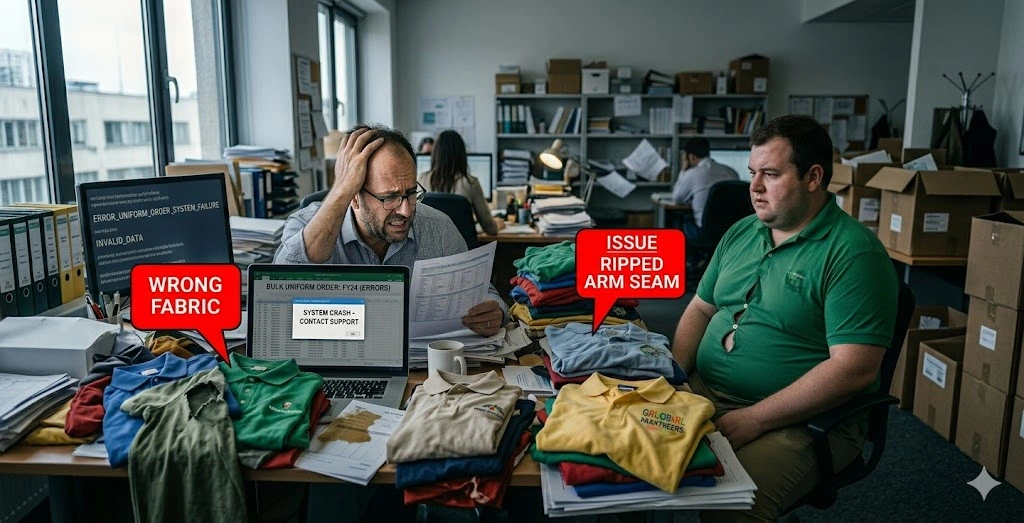
Custom uniforms are more than just clothing they define your team’s brand identity, professionalism, and operational efficiency. Ordering the wrong uniforms can lead to financial waste, reduced staff performance, and inconsistent team presentation. For businesses across the USA, bulk uniform orders must focus on correct sizing, quality fabrics, branding accuracy, and supplier reliability to avoid costly errors.
From low staff comfort and improper sizing to overlooking seasonal needs, customization, or employee feedback, these mistakes can disrupt workflow, reduce morale, and harm your company image. By identifying the top 10 common errors in bulk uniform ordering, businesses can implement strategic solutions to ensure staff look professional, stay comfortable, and perform at their best—without overspending or facing operational delays.
Mistake 1: Not Considering Staff Comfort
Comfortable, breathable uniforms boost staff productivity. Brands like Skechers by Barco provide Max Performance Work Shirts, featuring moisture-wicking, 4-way stretch fabrics for long shifts. These fabrics help staff stay comfortable and efficient.
- Choose breathable fabrics for long shifts.
- Ensure flexibility for daily movement.
- Consider soft, wrinkle-resistant materials.
- Test fabrics on sample uniforms first.
- Select uniforms suited for active staff.
- Avoid restrictive fits or tight cuts.
- Add stretch panels for better mobility.

Mistake 2: Ignoring Proper Sizing Options
Proper sizing prevents returns and improves staff comfort. Include unisex options, XS to 5XL ranges, and adjustable waistbands in designs. Use trusted brands like Dickies Relaxed Fit Work Pants for accurate sizing and comfort. Measure each employee and account for layering when ordering jackets or lab coats.
- Measure each employee individually before ordering.
- Select adjustable waistbands for comfort.
- Provide unisex options for flexible fits.
- Use size charts from reliable brands.
- Consider body type diversity in planning.

Mistake 3: Skipping Logo and Branding Details
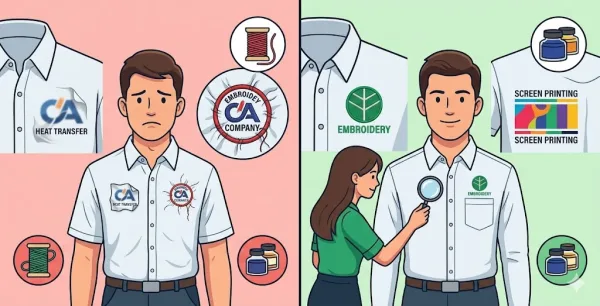
Use embroidery, screen printing, or heat transfer for durable team logos. Skechers by Barco Max Performance Tops allow dense embroidery without puckering, while Augusta Sportswear Breeze Pants work well with multi-color screen printing. Select the right method for clear, lasting logos.
Custom branding ensures professional uniformity, durable logos, and consistent corporate identity across staff uniforms for maximum team recognition.
- Embroidery ensures precise, long-lasting logos.
- Screen printing supports multi-color designs.
- Heat transfer allows flexible customization.
- Align logo placement for uniform consistency.
- Confirm durability through fabric tests.
- Align logo colors with your brand identity.
- Use high-quality threads and inks.
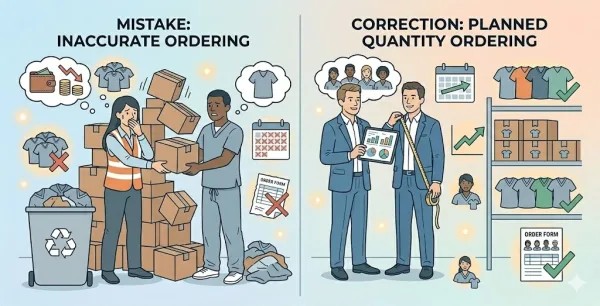
Mistake 4: Ordering Too Few or Excessive Quantities
To prevent shortages or excess, calculate staff needs before ordering bulk uniforms. Accurate quantity planning keeps your team prepared. Port Authority Core Classic Polo Shirts simplify bulk ordering and MOQs, making it easier to plan correct quantities for all staff.
- Count full-time and part-time employees.
- Include extra uniforms for replacements.
- Account for seasonal or temporary staff.
- Avoid over-ordering costly surplus stock.
- Use past orders to forecast needs.
- Monitor future staffing growth projections.
Mistake 5: Forgetting Maintenance and Care Instructions
For maximum durability, follow fabric care instructions on all uniforms. Wash polyester blends, pre-shrunk cotton, and wrinkle-resistant fabrics as instructed. Skechers by Barco Max Performance Work Shirts are designed to resist shrinkage, fading, and frequent washing while maintaining fit and durability.
Following fabric care instructions maintains color, fit, and longevity, preventing costly replacements and preserving staff professional appearance.
- Follow label washing instructions.
- Avoid high-heat drying that shrinks fabrics.
- Use gentle detergents to preserve material.
- Separate colors to prevent bleeding.
- Air-dry delicate items when possible.
- Pre-treat stains before washing uniforms.
- Rotate uniforms to reduce wear.

Mistake 6: Choosing Low-Quality Suppliers
Unreliable suppliers can cause delays, low-quality fabrics, and inconsistent uniforms. Selecting verified suppliers guarantees timely delivery and professional-grade uniforms. Red Kap Industrial Workwear offers durable fabrics, consistent quality, and reliable nationwide shipping for bulk uniform orders.
- Check supplier certifications and quality reviews.
- Request sample uniforms before bulk orders.
- Confirm shipping reliability for deadlines.
- Evaluate customer service responsiveness.
- Verify fabrics and stitching durability.
- Look for previous B2B partnerships.
- Avoid suppliers with inconsistent quality history.

Mistake 7: Overlooking Customization Options
Neglecting customization reduces team identity and staff morale. Adding employee names, department badges, or safety features enhances team cohesion and professionalism. Augusta Sportswear uniforms support bulk customization, and The Apparel Factory provides screen printing, embroidery, and heat transfer for consistent branding.
- Align colors, logos, and department badges with branding.
- Choose functional placement for employee names.
- Combine embroidery with screen printing techniques.
- Consider reflective or safety customization options.
- Verify durability of printed or stitched designs.

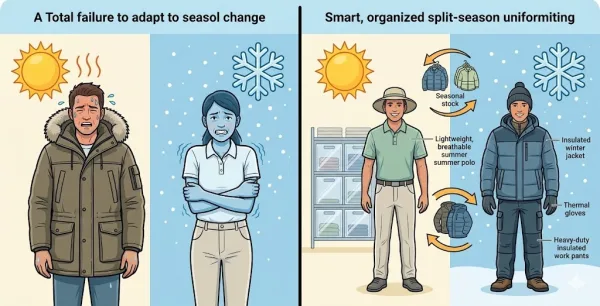
Mistake 8: Ignoring Seasonal Uniform Needs
Uniforms must adapt to seasonal changes to ensure staff comfort and efficiency year-round. Carhartt Force® Workwear offers breathable summer fabrics and insulated winter options. Rotate stock to maintain comfort, functionality, and uniform longevity.
- Stock lightweight summer layers to keep staff cool.
- Include insulated jackets, pants, and accessories for winter.
- Rotate old uniforms to maintain freshness.
- Ensure layering allows full mobility.
- Plan stock ahead of seasonal transitions.
Mistake 9: Over-complicating Uniform Designs
Complex uniform designs can delay production, increase costs, and reduce efficiency. Focus on essential branding and functional uniforms that support bulk production. Red Kap Industrial Workwear offers simple, customizable options suitable for professional teams.
- Limit logos, graphics, and patterns to streamline production.
- Prioritize durability and practicality over decoration.
- Stick to standard cuts for efficiency and consistent sizing.
- Simplify embroidery or print placement for faster turnaround.
- Ensure branding is clear, professional, and recognizable.

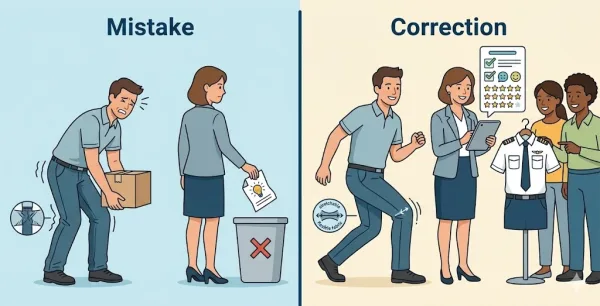
Mistake 10: Neglecting Staff Feedback
Ignoring staff feedback lowers uniform adoption, morale, and satisfaction. Collecting employee input ensures uniforms are comfortable, practical, and widely accepted. Dickies Flex Work Pants are designed based on staff preferences, demonstrating the value of feedback in bulk uniform orders.
- Survey staff on fit, fabric, and comfort before ordering.
- Adjust styles for mobility, safety, and active roles.
- Pilot sample uniforms with employees before bulk orders.
- Invite practical suggestions for design improvements.
- Use feedback to finalize sizes, cuts, and branding.
Final Thoughts
Avoiding these ten mistakes ensures your team looks professional and stays comfortable year-round. Proper sizing, breathable fabrics, and thoughtful branding enhance staff efficiency and appearance. Seasonal planning and employee feedback improve comfort and adoption. Reliable suppliers and practical customization options ensure durable, consistent bulk uniforms. Partner with The Apparel Factory for expert uniform solutions, nationwide delivery, and lasting team impact.
Frequently Asked Questions

Published on:
May 25, 2026