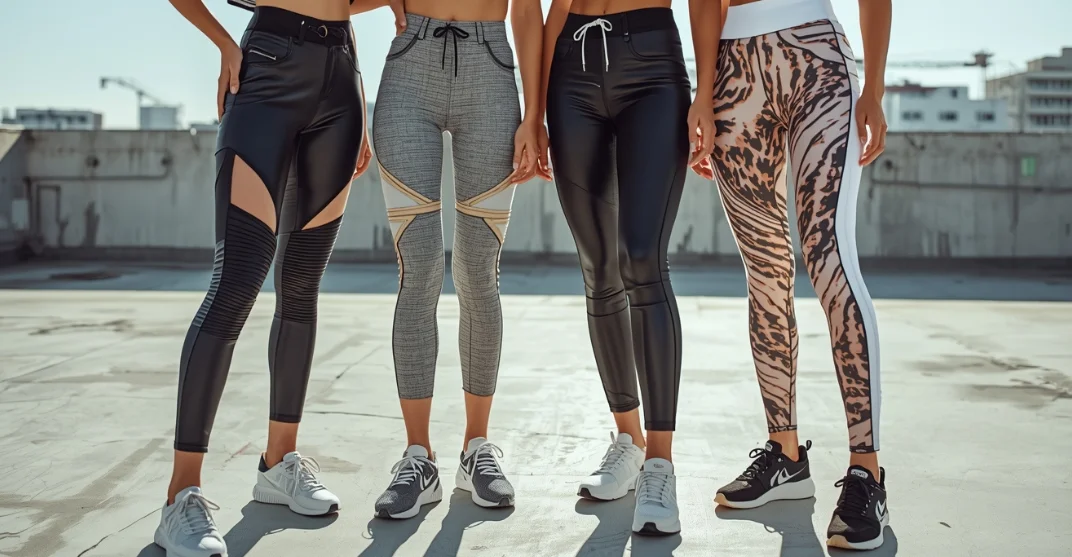
Hybrid leggings in 2026 are defined by the fusion of high-performance compression and professional aesthetics. Key customization trends include the use of high-denier matte fabrics, graduated compression for all-day wear, hidden utility features, and sustainable earth-tone palettes.
What are Hybrid Leggings?
Before we jump into customization, we must define the “Hybrid” concept. In 2026, consumers want a single pair of leggings that can survive a high-intensity 7 AM workout, a 10 AM Zoom call (with a blazer on top), and a 6 PM grocery run.
Why this matters for your business:
Providing a product that serves three purposes instead of one increases the perceived value. When you order wholesale activewear, focusing on hybrid designs means you are selling “efficiency” and “lifestyle,” not just fabric. According to recent global athleisure market reports, the demand for “desk-to-gym” apparel is expected to dominate the textile industry through 2026.
The core of a hybrid legging lies in its fabric tech. We are moving away from the shiny, thin leggings of the past toward matte-finish, high-density interlock knits that look like premium trousers but feel like a second skin.
Trend 1: Comfortable All-Day Fit
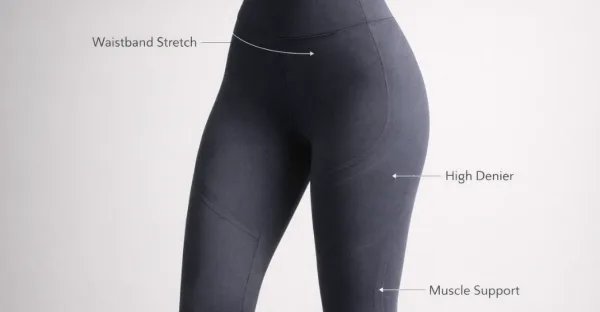
The first pillar of 2026 hybrid fashion is “Adaptive Compression.” Traditional leggings are often either too restrictive for long-term sitting or too loose for high-impact movement. The hybrid model uses zoned engineering.
Fabric Choice:
Use a Nylon-Spandex blend (typically 75/25) with a high denier count (300+ GSM). This ensures a “Squat-Proof” thickness and a professional matte finish. Unlike cheaper polyester, this fabric lacks the “synthetic shine,” allowing it to mimic premium tailored trousers under office lighting.
How to Customize (Graduated Compression):
Specify anatomical mapping in your bulk orders. This involves localized compression that supports muscles during a workout but features a relaxed tension at the waistband to ensure 8-hour sitting comfort without “digging in.”
Branding Tip:
Utilize Heat-Transfer Vinyl (HTV) with a “Soft-Touch” matte finish. Keep branding tonal—think charcoal logos on black leggings. Large, glossy prints are a relic of the past; 2026 is about “Quiet Luxury” and subtle brand presence.
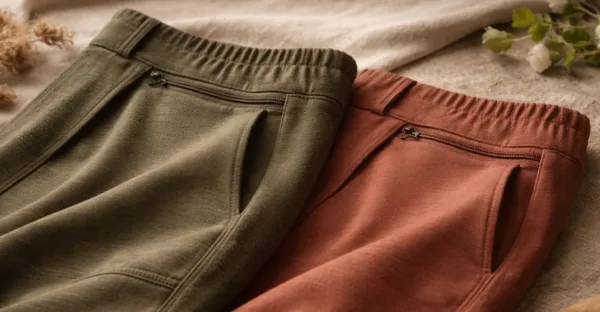
Trend 2: Nature-Inspired Colors & Eco-Friendly Fabrics
In 2026, the color palette has shifted from neon “gym-only” colors to nature-inspired tones.
Fabric Choice:
Opt for GOTS-certified Organic Cotton blends or Recycled Polyester (RPET). These materials offer a natural, soft-hand feel that mimics a “second skin.” The texture is less synthetic, which is essential for the hybrid transition into professional casual wear.
How to Customize (Aesthetic Integration):
Focus your collection on Earth Tones such as Espresso, Moss Green, Slate Blue, and Terracotta. These colors are psychologically associated with premium brands and pair effortlessly with corporate custom outerwear like blazers and trench coats.
Branding Tip:
Implement Laser-Etched Branding. This technique removes a microscopic layer of fabric to create a permanent, textured brand mark without using ink. It is the pinnacle of sustainable branding for 2026 and provides a sophisticated, “barely-there” aesthetic.
Trend 3: Invisible Pockets for Your Essentials
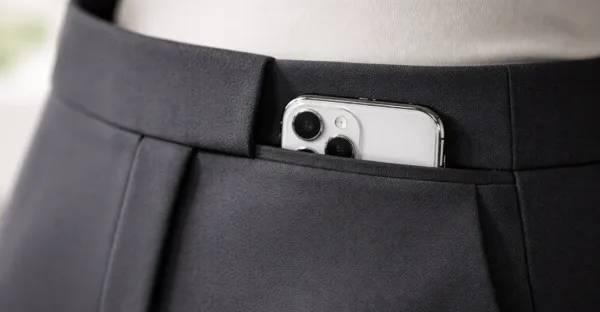
Functionality drives the hybrid trend. A professional needs a secure place for a smartphone or key card that doesn’t disrupt the clean silhouette of the garment.
Fabric Choice:
Use Interlock Knit construction. This double-knit technique provides the structural integrity required to support the weight of devices in pockets without the fabric sagging or losing its silhouette over time.
How to Customize (Hidden Utility):
Design Invisible Waistband Pockets or pockets integrated into the side seams. For 2026, utility must be “visually silent,” a concept gaining traction in modern industrial design. Avoid bulky external cargo pockets to maintain a sleek, trouser-like appearance suitable for meetings.
Branding Tip:
Place a small 3M Reflective logo near the pocket opening. This is a dual-purpose customization: it provides safety for night-time commuters and acts as a high-tech design accent that appeals to the “Utility-Wear” trend.
Trend 4: Stylish Metal Zips and Premium Details
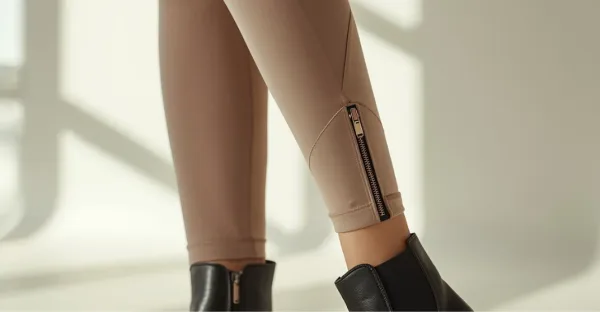
To make a legging truly “Hybrid,” it needs elements borrowed from traditional tailoring. Metal hardware is the bridge between sports and fashion.
Fabric Choice:
Select a Lycra-infused Interlock fabric with a “Silk-Finish.” This specific finish has a very subtle luster (not a gym-shine) that complements metallic hardware, giving the leggings an expensive boutique appearance.
How to Customize (Hardware Integration):
Incorporate Functional Ankle-Zippers in Rose Gold, Gunmetal, or Matte Black. This allows the wearer to switch from a “Tapered Gym Fit” to a “Straight-Leg” look that fits over loafers or boots in seconds.
Branding Tip:
Use Metal-Plate Branding. A small, polished metal tag sewn onto the waistband or hip is a massive trend for 2026. it moves the product from “Activewear” to “Designer Apparel,” justifying a higher price point for your brand.
Trend 5: High-Waisted Design for a Perfect Shape
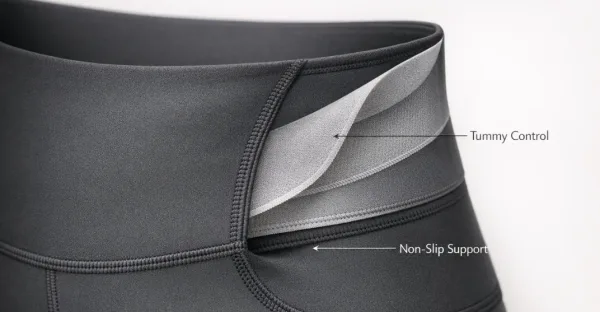
The waistband is the most critical structural element. In 2026, the “Power-Waist” trend focuses on providing a non-slip, high-rise fit that mimics high-waisted dress pants.
Fabric Choice:
Specify a Double-Layered Power Mesh lining within the waistband. This provides a “tummy-control” effect and prevents the waistband from rolling down during either high-intensity movement or long office hours.
How to Customize (Anatomical Seaming):
Use Flatlock Stitching in curved patterns that follow the body’s natural contours. Customize the design to remove the center-front seam; this creates a smooth, professional front that mimics premium formal wear.
Branding Tip:
Utilize Internal Silicone Grippers customized with your brand’s tagline. It is a “hidden” brand experience that ensures the leggings stay in place while providing a premium, technical feel to the user.
The Business Case for Hybrid Customization
Investing in the hybrid trend is a strategic move for any apparel business. In 2026, the “all-day” garment category is seeing a higher growth rate than traditional gym wear. By focusing on these specific customization patterns balancing fabric density, graduated compression, and luxury branding you are positioning your brand to capture a more affluent, busy, and fashion-conscious demographic.
At The Apparel Factory, we specialize in these high-level technical customizations. Whether it is sourcing the perfect interlock knit or executing precision embroidery or screen printing, we provide the infrastructure for your brand to lead the 2026 hybrid revolution.
Conclusion:
The transition to hybrid fashion is not a passing phase; it is a lifestyle evolution. By focusing on these five customization trends balancing fabric density, graduated compression, and luxury branding you are positioning your brand to capture the modern, fashion-conscious professional.


Frequently Asked Questions

Published on:
February 25, 2026