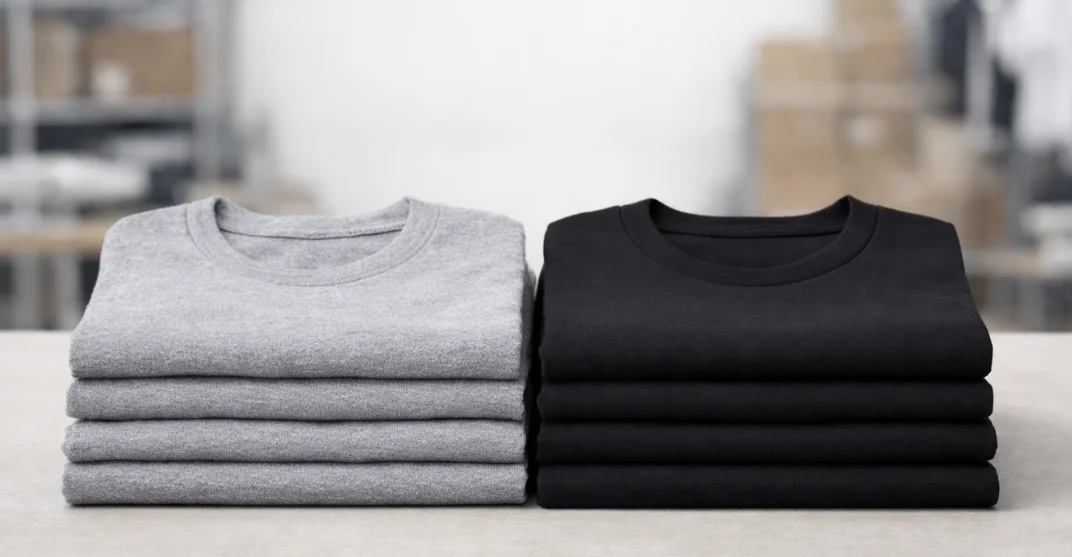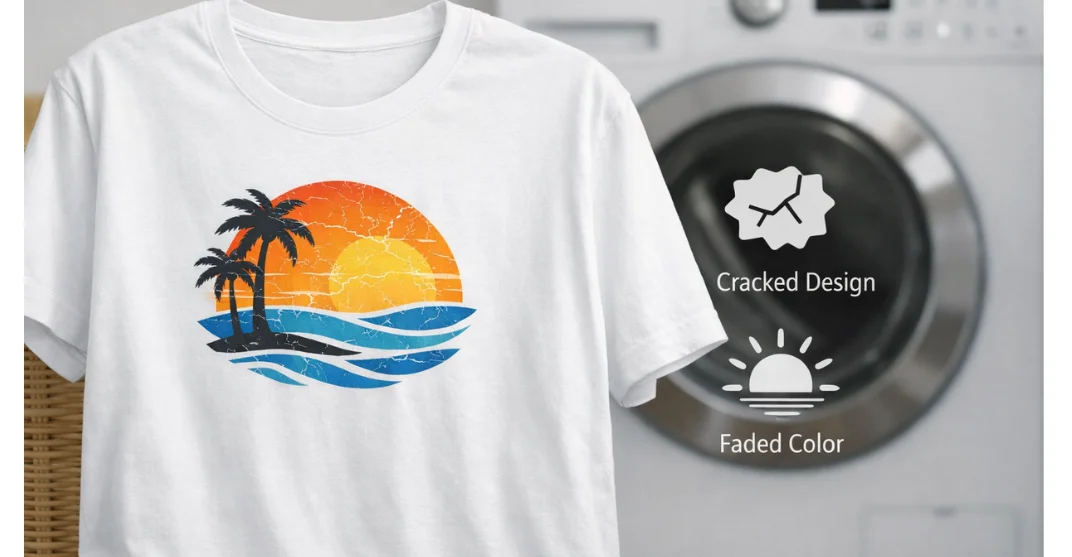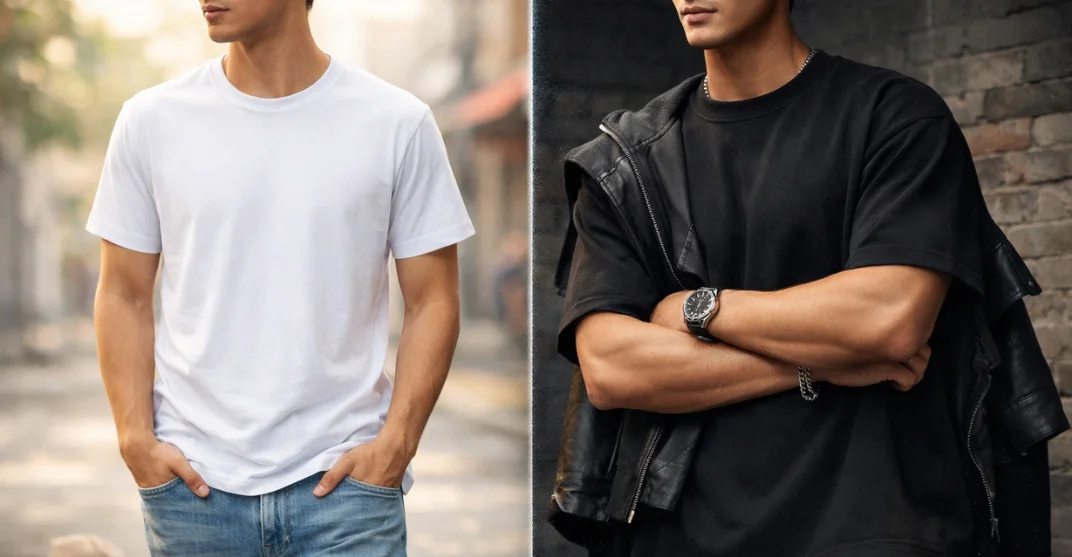
Choose 180 GSM (Mid-weight) if you are targeting high-volume, breathable summer collections or layering pieces. Choose 240 GSM (Heavyweight) if you want a “Luxury Streetwear” aesthetic, characterized by a boxy fit, structured drape, and premium retail value. While 240 GSM is more expensive, it offers higher perceived value for streetwear enthusiasts.
In the world of high-end streetwear, the “feel” of a garment often speaks louder than the design printed on it. If you are building a brand in 2026, you’ve likely hit the most debated technical crossroad: 180 GSM vs. 240 GSM.
Is 180 GSM too “cheap” for a premium drop? Is 240 GSM too heavy for daily wear? The success of your streetwear brand depends on getting this balance right. This guide breaks down the technical truth, the business ROI, and the consumer psychology behind fabric weights to help you make the right call.
What Does GSM Actually Mean for Your Brand?
Before we compare the two, let’s clear the air. GSM stands for Grams per Square Meter. It is a metric used to measure the density and weight of the fabric.
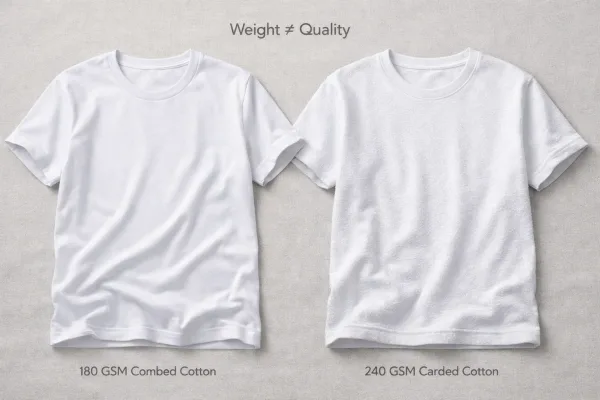
A common mistake new brand owners make is assuming Higher GSM = Higher Quality. That is wrong.
Quality is determined by the yarn (Combed vs. Carded cotton) and the knitting process. GSM is simply about the “heaviness.” A 180 GSM combed cotton tee can feel much more luxurious than a 240 GSM carded (rough) cotton tee. However, in the streetwear niche, weight equals status.
180 GSM: The “Classic” Versatile Choice
180 GSM is often referred to as “Mid-weight” fabric. It is the industry standard for most retail brands worldwide.
The Pros:
-
Breathability: Perfect for hot climates and summer drops. It allows airflow, making it comfortable for all-day wear.
-
Layering: Since it isn’t bulky, it works perfectly under hoodies, flannel shirts, or jackets.
-
Cost-Effectiveness: 180 GSM blanks are generally 20-30% cheaper than 240 GSM. For a startup brand, this means better margins or more budget for marketing.
-
Draping: It follows the body’s natural shape. If your brand focus is “Active-wear” or “Slim-fit” aesthetics, this is your winner.
The Cons:
-
Lack of “Structure”: It doesn’t hold a “Boxy” shape. If the wearer has a thin frame, the shirt might look a bit “flat.”
-
Perceived Value: In the 2026 streetwear market, Gen-Z often associates thinness with fast fashion.
240 GSM: The “Heavyweight” Streetwear King
If you look at brands like Fear of God (Essentials) or Represent, you’ll notice their tees don’t just hang; they stand. That is the magic of 240 GSM.
The Pros:
-
The “Boxy” Fit: Due to its thickness, 240 GSM fabric has high “structural integrity.” It holds its shape regardless of the wearer’s body type.
-
Premium Perception: There is a psychological “weight-to-quality” ratio in customers’ minds. When they hold a 240 GSM shirt, they feel they are getting their money’s worth.
-
Durability: It withstands more washes without losing its silhouette. This is the “50-wash test” territory.
-
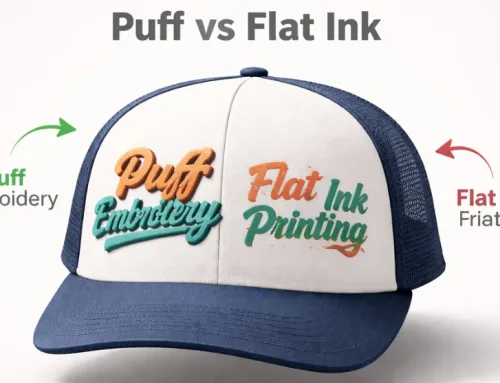
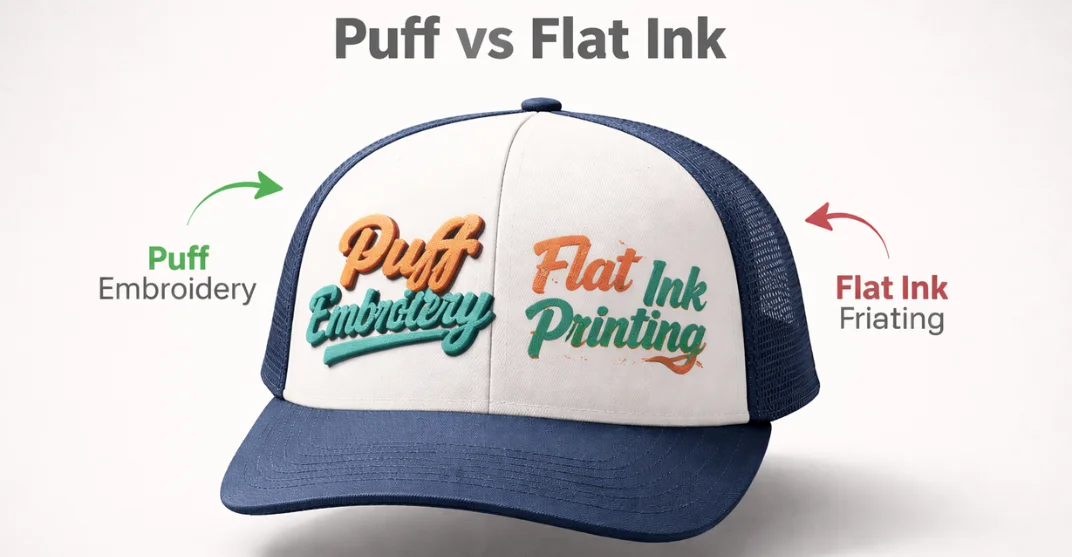
Embroidery Friendly: If your brand uses heavy embroidery, 240 GSM is mandatory. Thin fabric will “pucker” (wrinkle) around the stitches; 240 GSM stays flat.
The Cons:
-
Heat Retention: It can be too warm for peak summer.
-
Higher Production Cost: It requires more cotton and specialized knitting machines, increasing your COGS (Cost of Goods Sold).
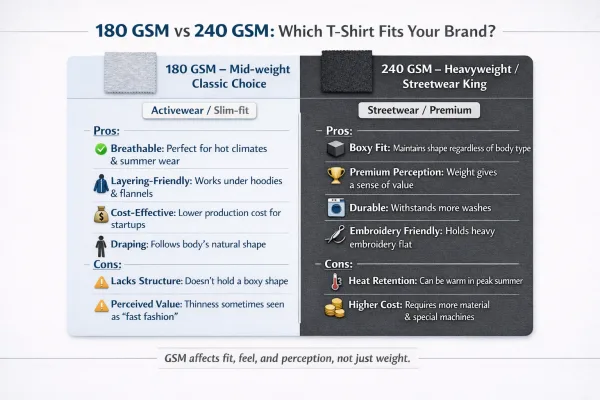
180 GSM vs. 240 GSM: Data Comparison
Which One Should You Choose for Your Brand’s Success?
Here is the direct strategy:
Choose 180 GSM if:
-
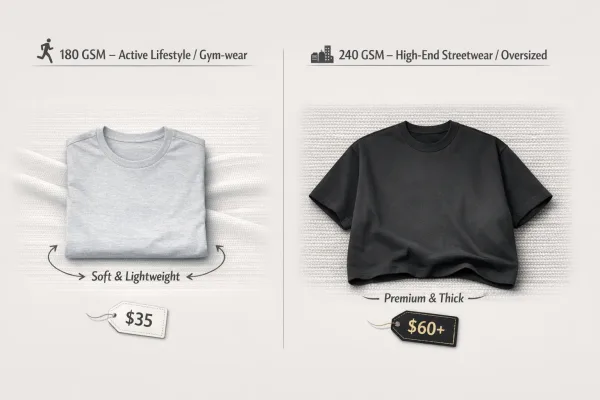
Your brand is focused on Active Lifestyle or Gym-wear.
-
You are selling in regions with high humidity.
-
You want to keep your retail price under $35 to move high volumes.
-
Your designs are large, soft-hand water-based screen prints.
Choose 240 GSM if:
-
You are building a High-End Streetwear brand.
-
Your aesthetic is “Oversized,” “Drop-shoulder,” or “Boxy.”
-
You want to justify a $60+ price tag.
-
You are using premium techniques like embroidery or 3D puff printing.
Technical Performance: Printing & Longevity
Let’s talk shop. If you are sourcing from The Apparel Factory, you need to know how these fabrics react to decoration.
-
DTG (Direct to Garment): 180 GSM is excellent for DTG as it usually has a tighter knit surface for the ink to sit on.
-
Screen Printing: Both work well, but with 240 GSM, you can use “Heavy Deposit” inks without the shirt feeling like a piece of cardboard.
-
Embroidery: This is where 240 GSM wins. The weight of the fabric supports the thread count of complex streetwear logos.
Final Verdict: Building Topical Authority
To succeed in the sustainable streetwear game, you don’t just sell a shirt; you sell a Standard. If you are launching a core collection, we recommend a Hybrid Strategy. Use 180 GSM for your “Essential” line (daily wear) and 240 GSM for your “Limited Drops” (premium pieces). This gives your customers a choice and establishes your brand as technically proficient.
Ready to source the perfect blanks? Explore our Wholesale T-Shirts Collection to find the foundation for your next big drop.
Frequently Asked Questions

Published on:
March 21, 2026